05. Living Code: Gene Platforms and Shared Cures
Guarding the Printing Press While Sharing the Books
Artificial intelligence writes in floating-point numbers; modern biomedicine writes in the four-letter alphabet of life (A, C, G, U/T). Over the past decade, Chinese biotech teams have advanced from making off-patent generics to inventing reusable cell and gene therapy (CGT) engines and small-interfering RNA (siRNA) platforms that silence disease-causing genes before harmful proteins form.
The draft distinguishes ownership of a reusable medicine-development platform from specific drug projects. It proposes limits on covered platform ownership transfers, with explicit exclusions for licensing and other activities. Those exclusions concern these entries; medicines and clinical trials can still face other rules. CN-A1, 262704J and 262705J CNQA
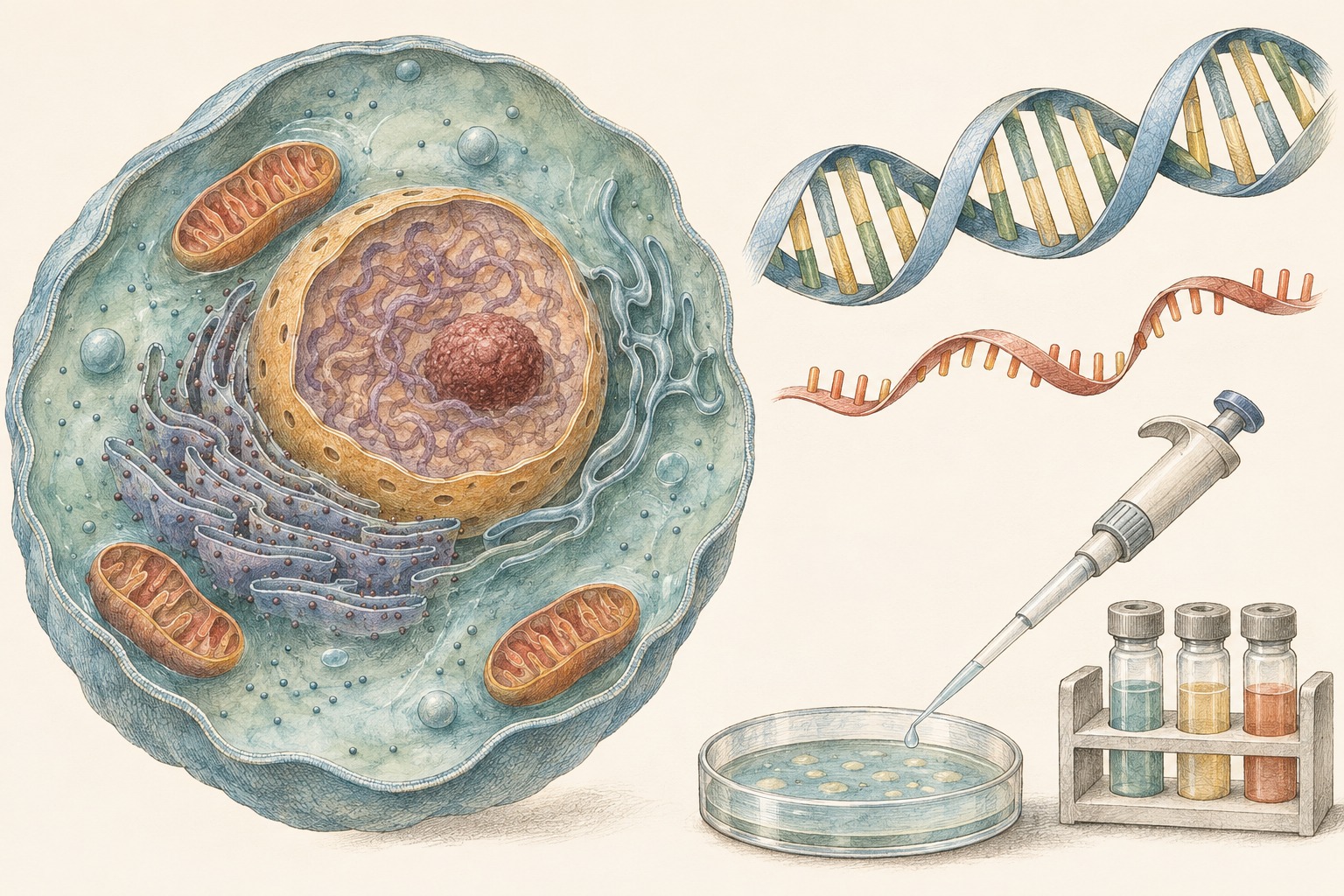
Picture a foundational CGT or siRNA platform as a custom printing press perfected over ten years (delivery vectors, chemical stabilization recipes, and modular design rules capable of printing twenty future therapies). Picture a specific clinical drug candidate as one book printed on that press:
- Platform ownership transfer is proposed prohibited (262704J and 262705J). The draft targets overseas ownership transfers of the specified reusable platforms, with explicit exclusions described below. The new prohibition is a proposal, not an already-final rule introduced by Announcement 48. CN-A1
- Out-licensing, contract manufacturing, and single-drug partnerships stay open: Three explicit notes under both entries carve out overseas out-licensing (
对外授权许可), outsourced R&D and manufacturing (CRO/CDMO) where ownership remains domestic, and all pipeline data needed for preclinical research, clinical trials, manufacturing, quality control, regulatory approval, and commercialization of specific drug candidates in global business-development deals CN-A1 CNQA. Only a sham "perpetual buyout license" that strips domestic ownership in substance crosses the red line.
Undisclosed Biological Targets and Biosecurity Walls
Two proposed restricted entries (262705X and 262706X) cover Chinese-owned technology for discovering and validating wholly new therapeutic targets in CGT and siRNA medicine, defined strictly as molecular targets never previously disclosed anywhere in the world in patents, journals, public databases, industry filings, or conferences CN-A1. Even there, Footnote 3 provides automatic-licensing facilitation for public-health emergencies, humanitarian relief, international collaborative research using overseas resources, and overseas out-licensing CN-A1, note 3 CNQA.
The fifth entry (267302J, proposed prohibited) is a pure biosecurity wall against artificial genetic modification and directed serial-passage methods that enhance pathogen virulence or accelerate controlled pathogen evolution CN-A1, 267302J, paralleling Category 1 pathogen controls and EAR 744.4 on the US side EAR774 EAR744. (Bulk human genomic data, meanwhile, faces separate data-security rules in both countries, including the US Justice Department's Data Security Program `DOJ <https://www.justice.gov/nsd/data-security>`_.)
What This Means for the Two Teams
In medicine, the shared workbench involves platforms, research and particular treatments. The distinctions above help us ask which collaboration a rule reaches and which it leaves possible. We do not transfer the AI game scores to medicine or assume that open access alone establishes patient safety.
The two teams' starting point is in The Fortress Trap: How Both Sides Can Lose.