Impact of Export Controls on the Future of Open Source AI
AN ILLUSTRATED BOOK ON OPEN MINDS, SILICON HARDWARE, AND HUMAN PROGRESS
"He who lights his taper at mine, receives light without darkening me." Jefferson's 1813 image captures the promise of knowledge that can be shared without being used up. This book asks how controls on models and computing hardware can interrupt that exchange. JEFFERSON
Begin Reading the Book Download Typeset PDF Book Explore All 40 Checkpoints Official Approval & Contacts
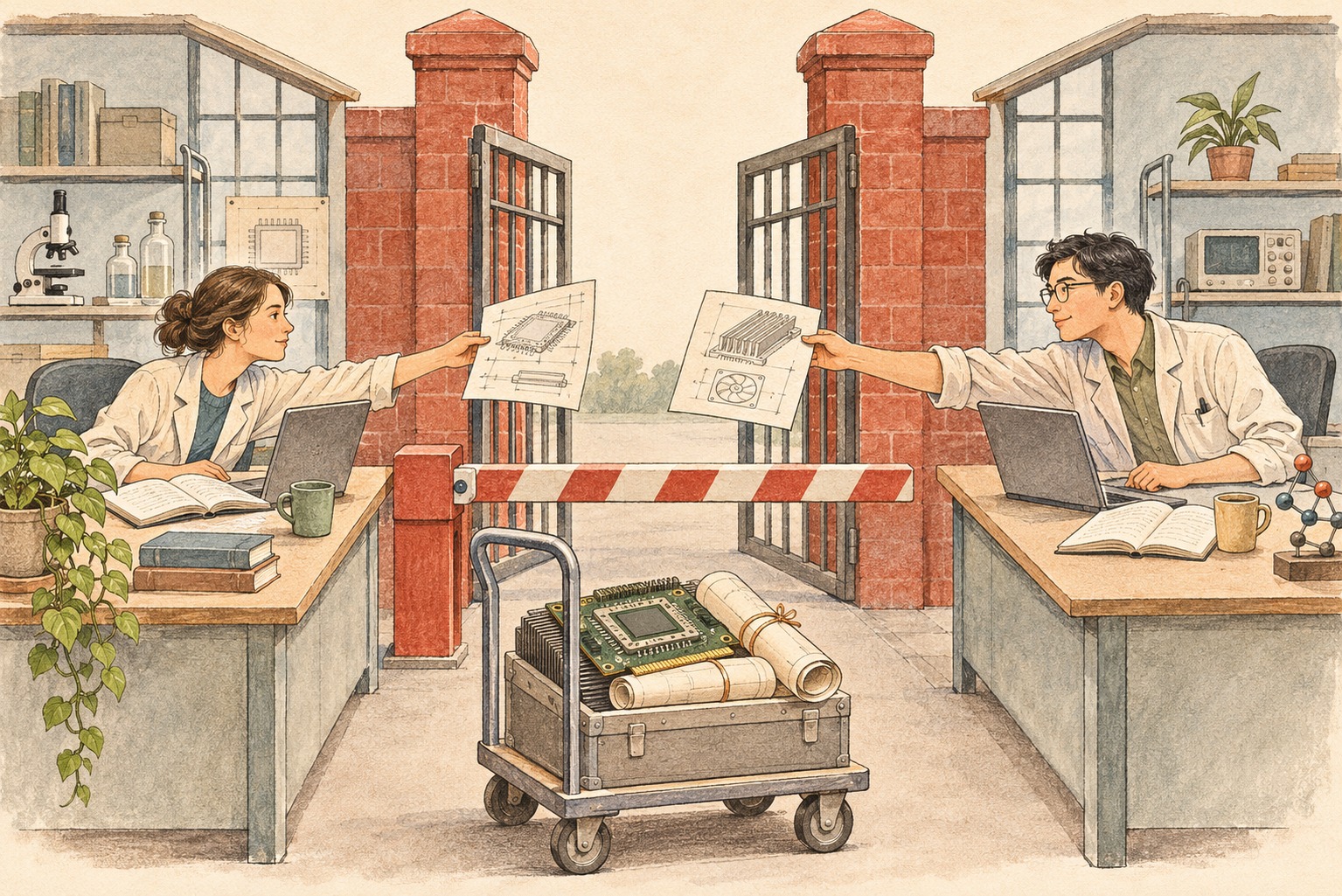
From an Open Republic of Ideas to a Guarded Horizon
An open model can let a university, a small business or a language project adapt a shared tool. These possibilities do not guarantee safety or equal access. Our argument is that broad restrictions can damage cooperation even when each country hopes to gain an advantage.
Open AI also needs physical computers. Large training runs can require advanced chips, memory and networks; smaller models can run on more ordinary equipment. Controls on hardware and design knowledge can affect access even when a model has a permissive license.
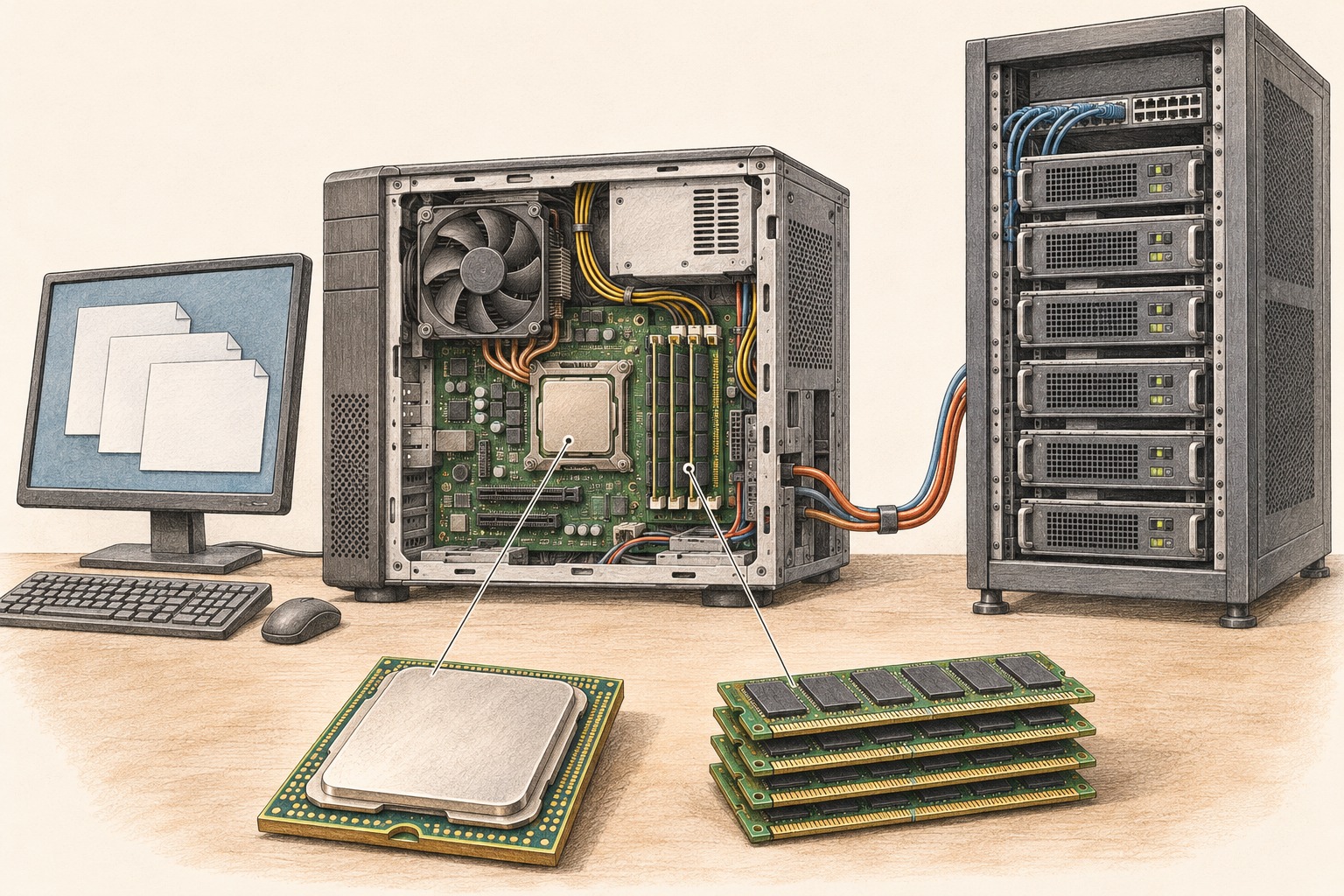
- Hardware: US rules cover specified chips and manufacturing items. China proposes controls on specified processor and memory designs and certain technologies for clusters with more than 10,000 cards. The scope depends on the precise item and conditions. CN-A1 US26 EAR734
- Models: Chinese temporary registration has started, while new catalogue prohibitions and restrictions remain proposed. US model-weight text and its announced non-enforcement policy are separate questions. CN48 CN-A1 EAR774 GAO26
The Fortress Trap: How Both Sides Can Lose
Imagine two research teams starting from one public AI model. A's team makes it run with less memory. B's team tests errors and helps fix them. Sharing the next improvements helps both, but each government worries about giving the other a one-sided advantage.
We give the four endings invented preference scores: mutual sharing gives 17 each; withholding while the other shares gives 20 to the withholding country and 3 to the sharing country; mutual restriction gives 5 each. Higher means preferred within this example. The book explains why we assume that ranking before showing how it creates the trap.
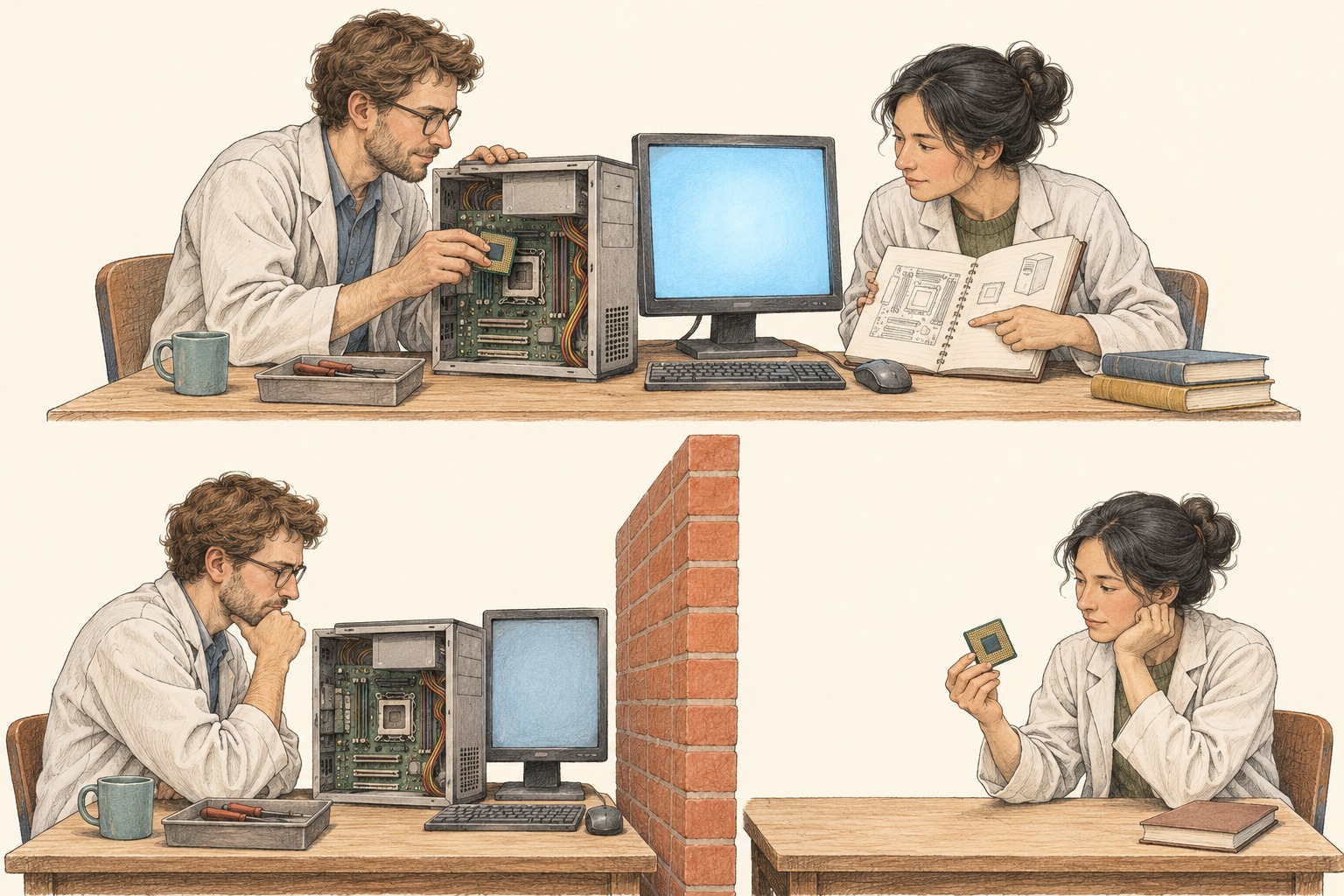
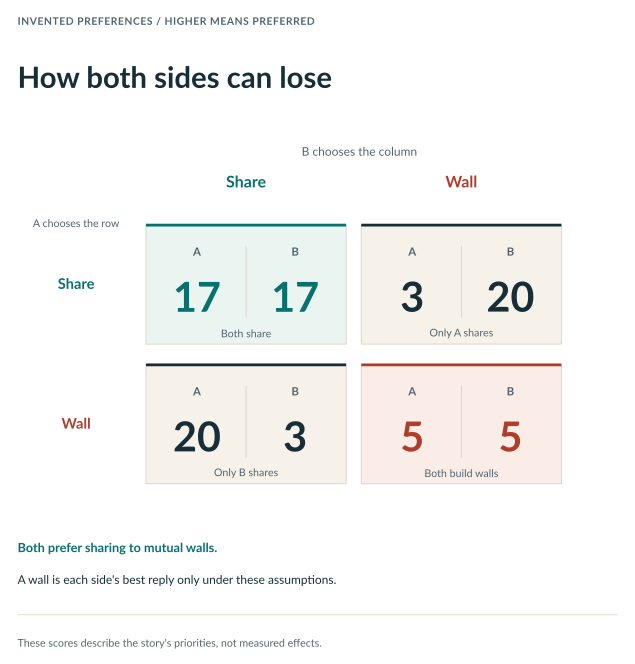
Each government then sees a reason to restrict: 20 beats 17 if the other shares, and 5 beats 3 if the other restricts. Both choose walls and get 5 each, although both prefer mutual sharing at 17 each. This is a possible failure of cooperation under our assumptions, not a measurement of US or Chinese policy. GAME
Read the worked story and its limits
The legal records and research references distinguish what is already operating, what remains proposed, and what is our analysis. They support three practical reading habits:
- Distinguish public files from first releases. Existing public technology, private derivatives and new open-source exports can take different routes. A copyright license is not a government permit. CN-A1 EAR774
- Keep current registration separate from the draft. China has begun temporary registration for covered transfers; new prohibitions and facilitated licensing remain proposals. CN48 CNQA
- Read deadlines in their proper scope. The standard licensing clocks do not promise the total duration of a project or the future automatic-licensing process. The book links the responsible authorities and their source records. CNTIER CNMEAS
- Cover & Overture: Jefferson's Taper, Hardware Roots & the Game-Theory Example
- Chapters 01 & 02: Announcement 48's Two Clocks & The Interactive 40-Checkpoint Atlas
- Chapters 03 & 04: Mind & Silicon Hardware Stack & Open-Source AI Before and After the Gates
- Chapters 08 & 10: Official Government Approval & Contact Directory & All 26 Verified Primary Sources